
Home | Territory | Countries and locations | Unforgettable places
Unforgettable places
There are places that tell the story of Comelico more than many words. Valleys, woods, mountain groups, rare natural environments and small mysteries carved into the rock make up a geography made up of wonder, silence and identity. These are the unforgettable places of the valley: scenarios to be crossed slowly, to be observed in detail and to be remembered for a long time, because here nature is not only beautiful, but deeply recognizable.
Things not to be missed
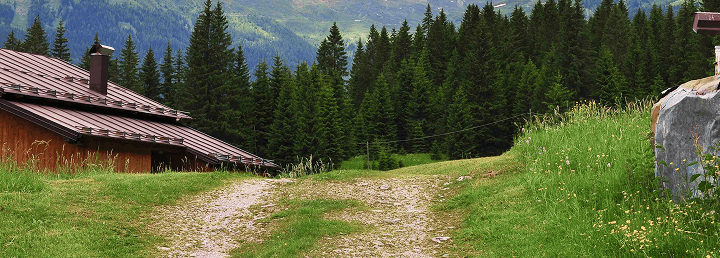
Val Visdende

Valgrande
Valgrande, near Padola, appreciated in every season, is a valley rich in biodiversity and evocative views. Beech, larch and fir forests coexist with natural sulphurous water springs in an environment accessible to all. The Lunelli Refuge is the starting point for high-altitude treks; the valley floor is ideal for family walks. In autumn one of the best places for foliage, in winter for cross-country skiing.
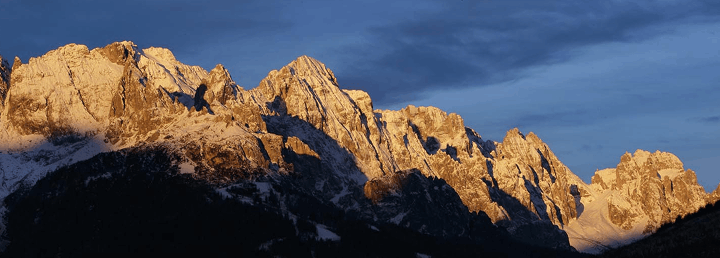
Popera Group
The Popèra Group is one of the strongest presences in the Comelico landscape: a ridge of about 10 km with peaks that reach three thousand meters, and paths that are a reference point for hikers and mountaineers. It is also a place marked by the Great War, the scene of fierce fighting between Italians and Austrians: trenches, military posts and remains still accompany some of the most popular trails.
There are numerous refuges in the Group to be used as support points for excursions: Berti Refuge, Lunelli-Selvapiana Refuge, Croda Rossa Meadows Refuge, Zsigmondy – Comici Refuge, Carducci Refuge.
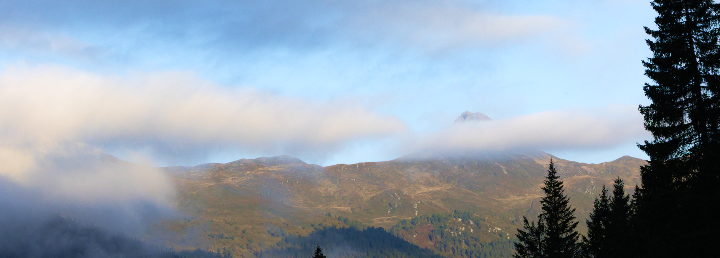
Upper Val Padola and Val Digon
Between the Monte Croce Comelico Pass and the border ridges of the Alta Val Padola, the crags of the Longerin and Monte Zovo in the Digon Valley, you can observe some of the widest and most surprising views of Comelico. Here the landscape changes continuously: woods, forks, valleys, light rocks and still evident traces of the battlefields accompany itineraries that put nature, geology and frontier in dialogue.
There are many refuges and huts in the area, which connect the numerous hikes with different levels of difficulty: the Coltrondo hut, the Rifreddo hut and hut and the De Doo hut in Comelico; the Alpe di Nemes hut, the Obstansersee-Hutte, the Filmoor-Standschutzen-Hutte.
The Three Thirds
The Tre Terza dominate the landscape around Santo Stefano di Cadore and offer one of the most evocative views of the entire valley and its villages. Terza Piccola, Terza Media and Terza Grande form a mountain crown that combines rocky hardness, natural environments rich in flora and a strong panoramic impact, much loved by the most trained hikers.
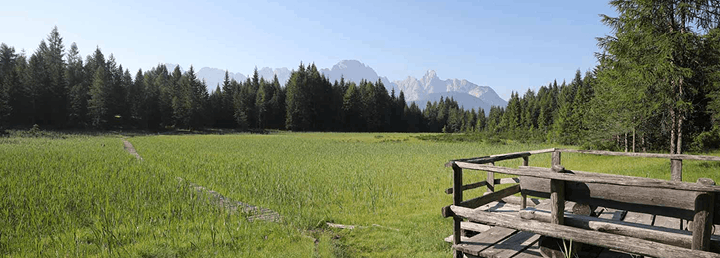
Danta Bogs
The Torbiere di Danta are one of the most precious naturalistic sites in the Veneto region. This wet, rare and delicate environment preserves an extraordinary biodiversity, including typical vegetation and protected species. Inside there is an educational path suitable for families and onlookers. A place to explore carefully, to discover a lesser-known face of the mountains.
Alpine Garden of Candide
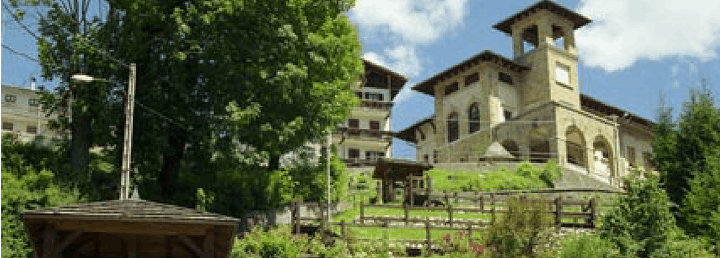
In the center of Candide, upstream of the village square, the Alpine Garden collects and enhances many mountain floral species – some very rare – in a path with steps and wooden walkways. It is a simple but surprising place, perfect for a walk among colors, scents and botanical details, especially in spring and summer.
Altars of the Val Visdende
The horse carved in the rock
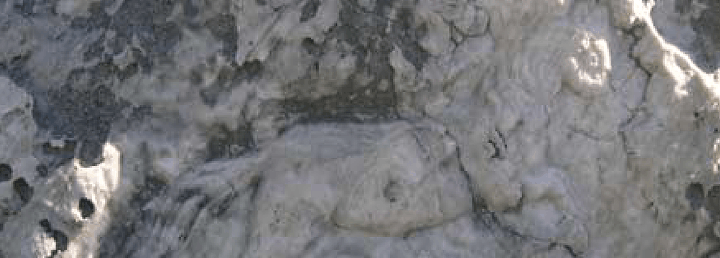
On Monte Cavallino, hidden among light rocks and border landscapes, there is a small horse carved in stone, made in the eighteenth century by a still unknown author. It is an unexpected, fascinating, almost enigmatic presence: an artistic detail perfectly integrated into nature, which makes this place even more memorable.
The pear of the borcia
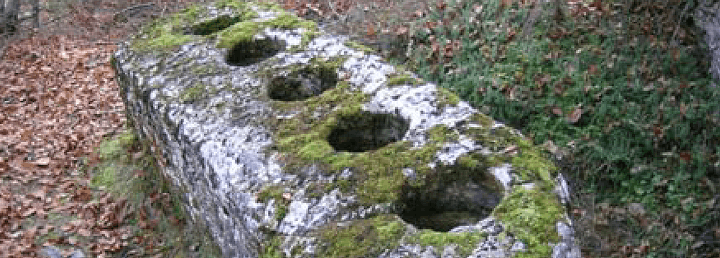
In the “d’la borcia” wood, along the road from Padola to the Sant’Antonio Pass, there is a three-meter monolith in a lying position: 70×70 cm, partly squared, with five cup-shaped holes on the upper surface — perfect, equidistant, inexplicable. Scholars and researchers have thought about it for a long time without finding a definitive answer. The pear d’la borcia remains the enigma of the valley.


